

Terfezia morenoi Bordallo, Ant. Rodr. & Morte
Persoonia 40: 325 (2018)
(Click on the picture to see more images)
Etymology:
Named after Prof. Gabriel Moreno, of the Universidad de Alcalá de Henares (Madrid, Spain), in recognition of his long and distinguished career in Spanish mycology and his outstanding contribution to the study of hypogeous fungi.
Macroscopic characters:
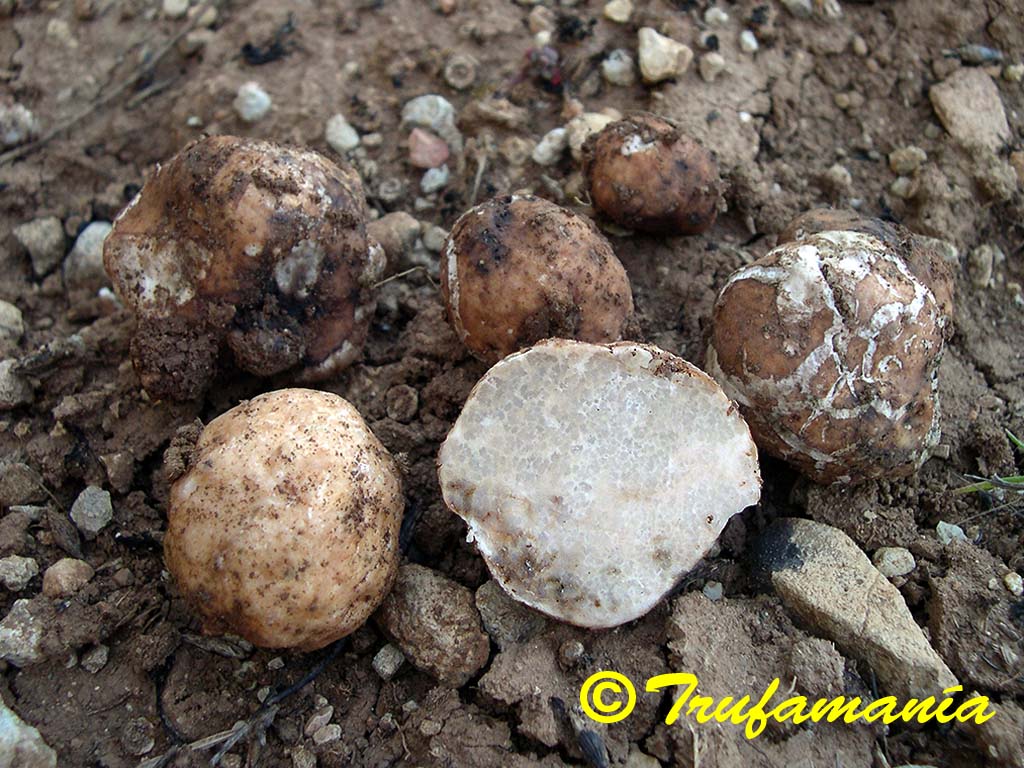
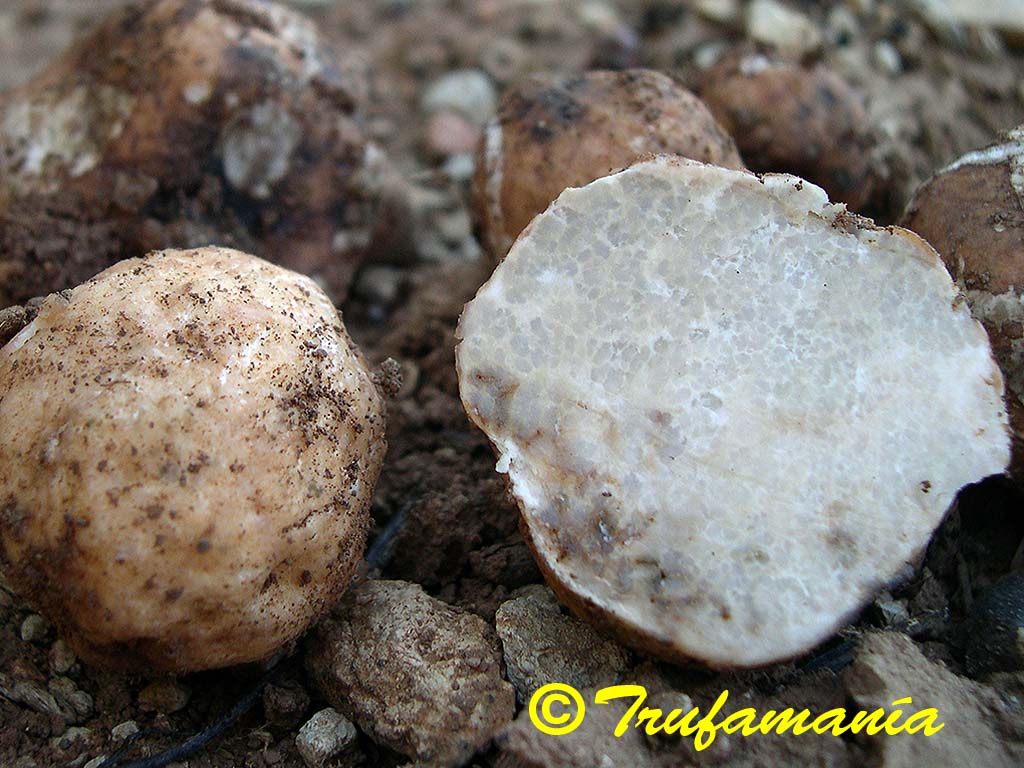
Ascomata: Hypogeous to partially emergent at maturity, 2–5 cm diam., subglobose, with a short base, cream-coloured at first, becoming brown and blackening on sun-exposed areas or upon handling, smooth.
Gleba: Solid, fleshy, succulent, whitish at first, with small pale grey pockets, maturing to greyish-green pockets of fertile tissue separated by whitish sterile veins, sometimes with salmon-pink spots. Often with small cavities indicating mycophagous activity.
Odour: Strong, more pronounced in mature specimens, becoming unpleasant with age.
Taste: Mild.
Habitat:
Terfezia morenoi grows in calcareous, clayey, alkaline soils, associated with Pinus spp. and Quercus ilex, in the absence of Cistaceae, and fructifies from March to April, making it the earliest-fruiting Terfezia species recorded in alkaline clay soils of eastern Spain. A circular brûlé or burnt area with scant vegetation is usually observed around its mycorrhizal host plant. This burnt area is very similar to those described for some Tuber species and can be interpreted as an allelopathic phenomenon due to volatile secondary metabolites emitted during its life cycle (Streiblová et al. 2012), which may also account for the strong odour characteristic of this species, a feature not observed in other Terfezia species with a faint spermatic odour or no odour.
Notes:
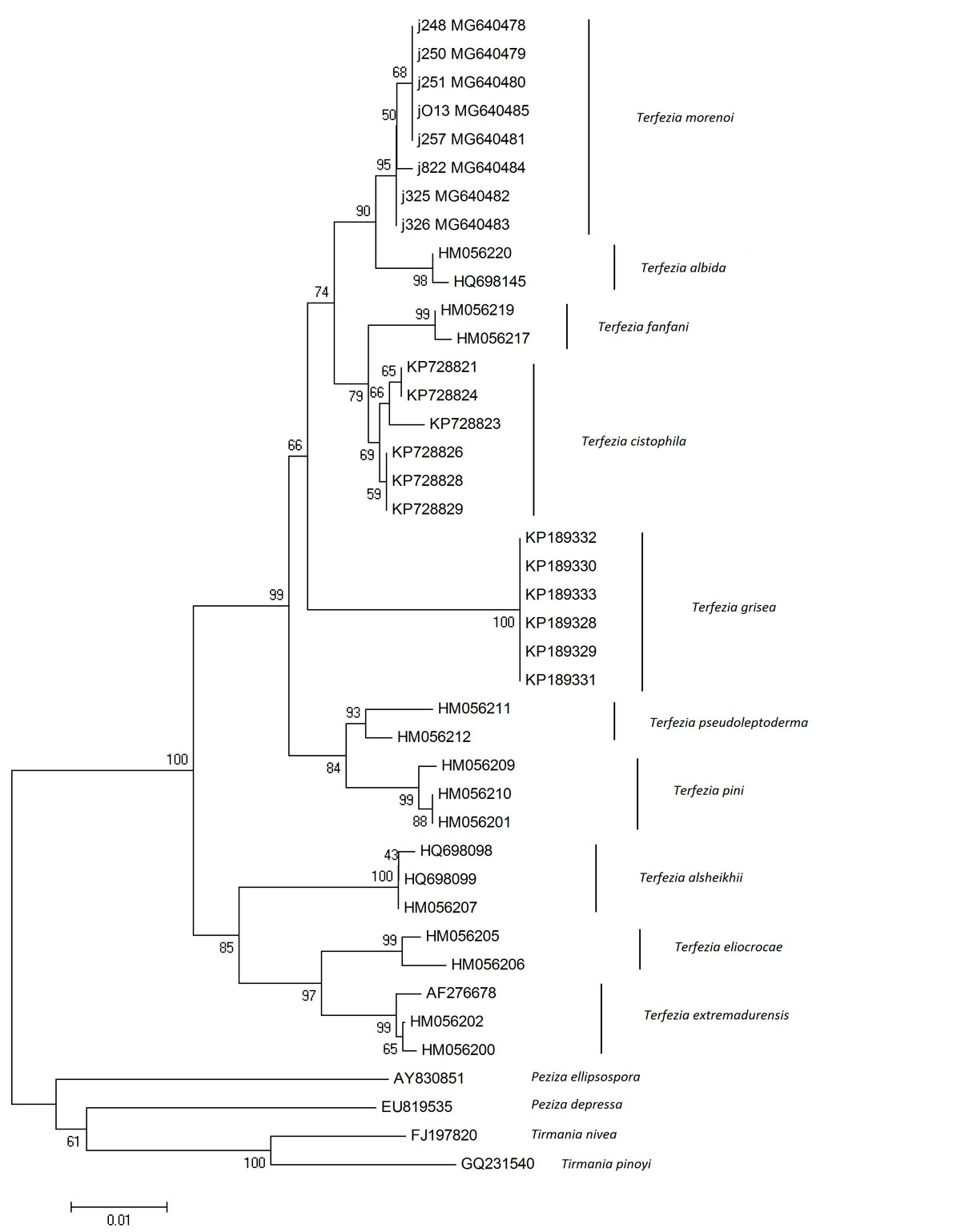
Among spiny-spored Terfezia species, Terfezia morenoi is characterised by its strong odour, which is attractive to animals, its greyish-green gleba, and by fruiting in spring in alkaline clay soils, in association with Pinus spp. and Quercus ilex, in the absence of Cistaceae. It differs from T. albida, the other spiny-spored species growing in alkaline clay soils, in that the latter has a spermatic odour, a white peridium, larger spores and a different host plant (Bordallo et al. 2013). Terfezia cistophila has a spermatic odour, a different host and grows in acidic soil (Bordallo et al. 2015). Terfezia olbiensis is odourless and grows in winter (Tulasne & Tulasne 1851). Terfezia grisea is odourless, has a blackish-grey gleba and a different host plant (Bordallo et al. 2015). Terfezia fanfani, T. pseudoleptoderma, T. extremadurensis, T. pini and T. leptoderma, the other spiny-spored species, differ in growing in acidic soil, lacking a distinctive odour and having larger spores. Moreover, the new taxon is distinguished from the other species on the basis of molecular data.
(Click on the picture to see more images)
Microscopic characters:
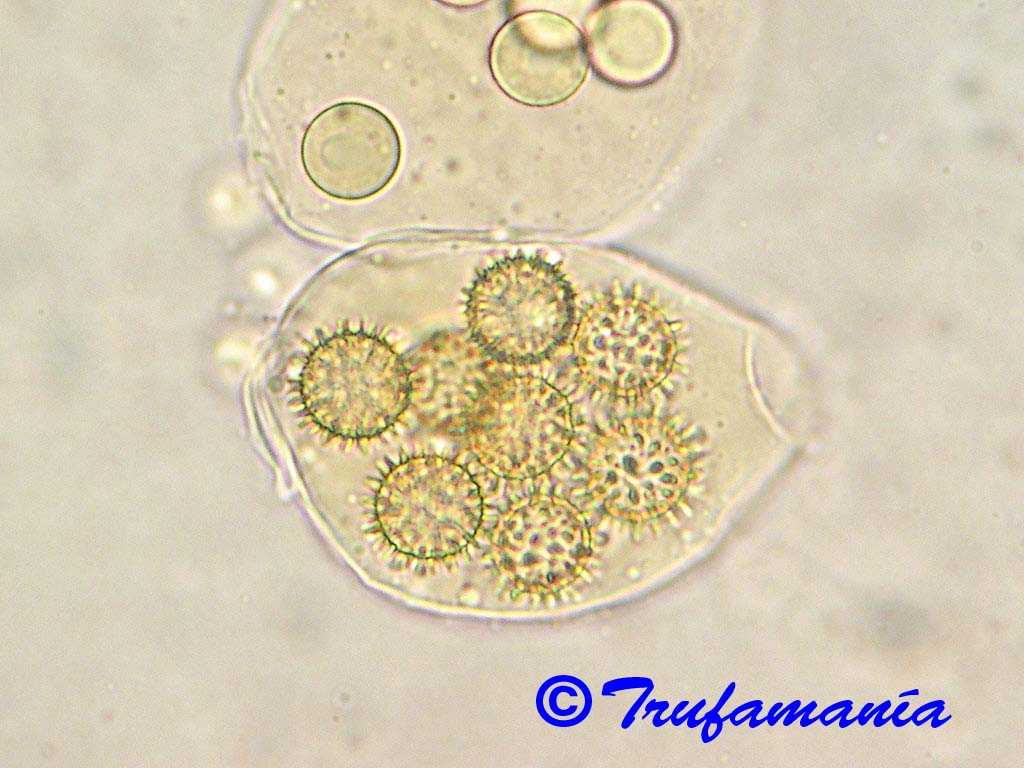
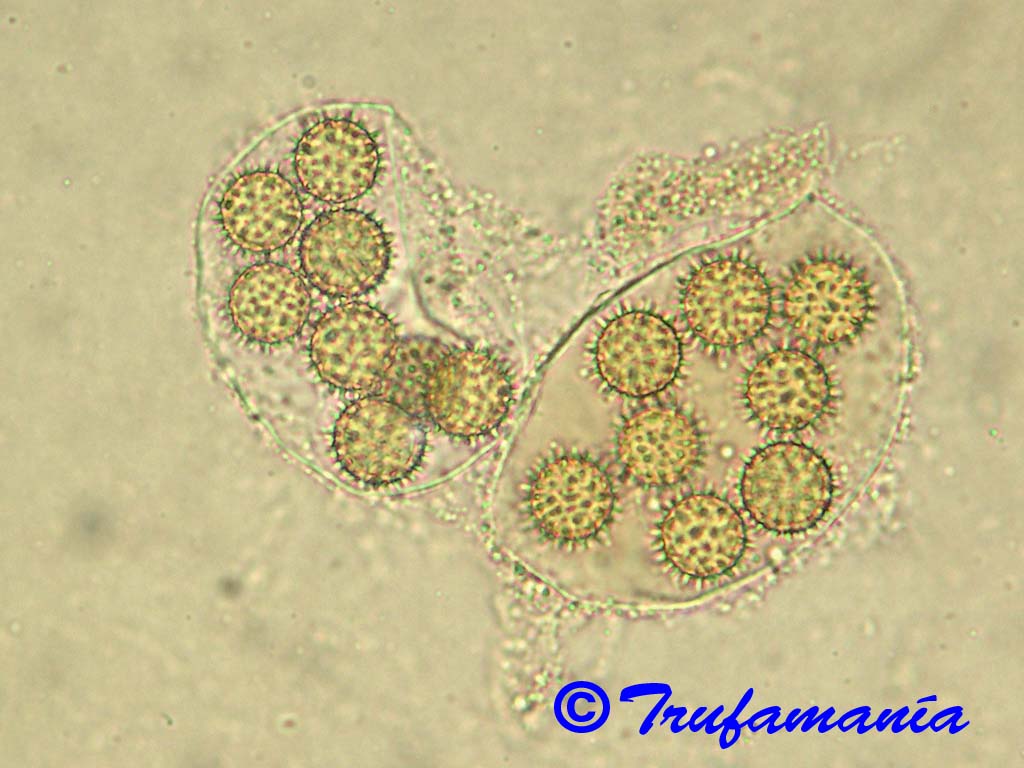
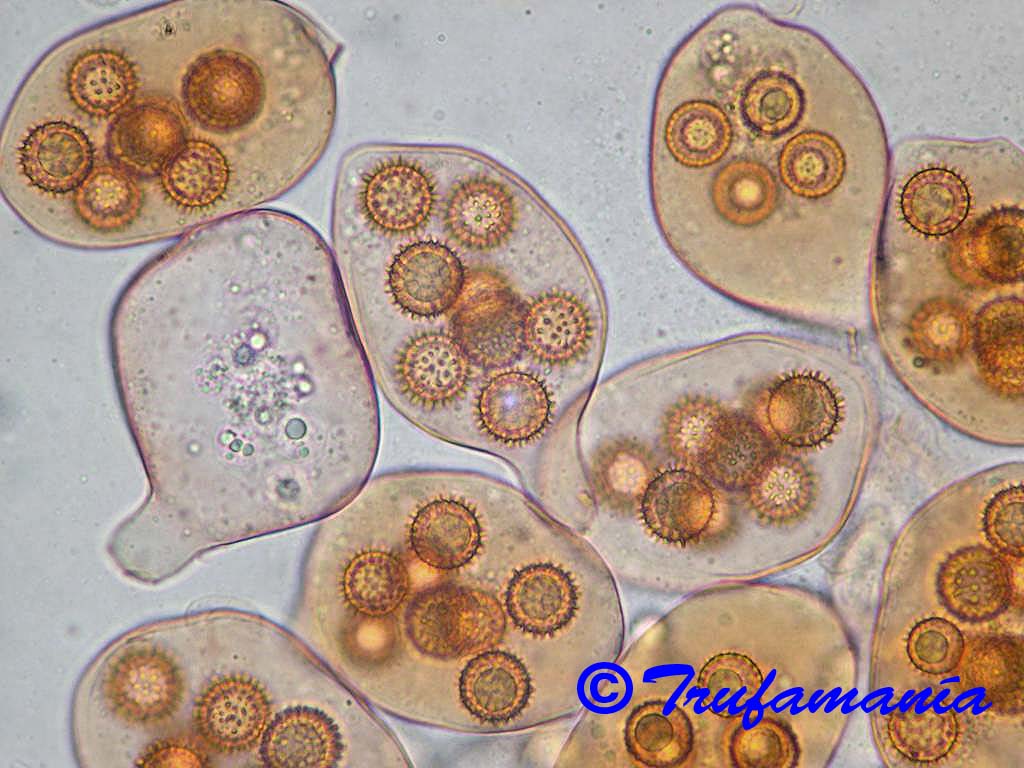
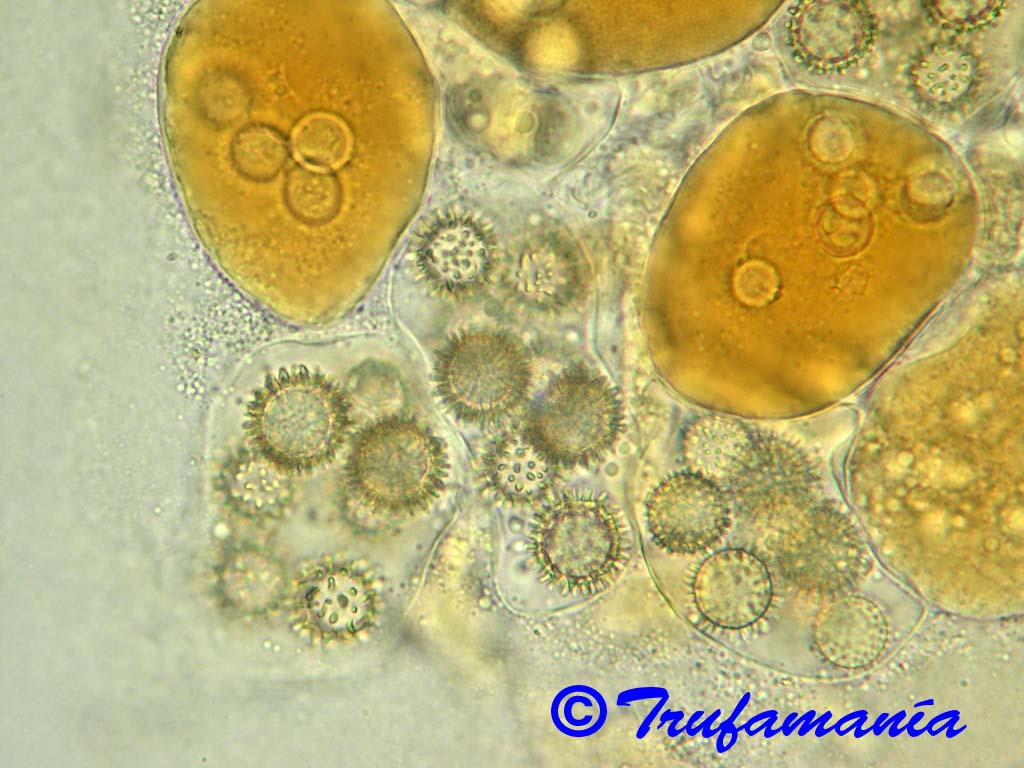
Asci: inamyloid, ellipsoid to ovoid, citriform, sessile or short-stipitate, 60–90 × 50–60 μm, with walls 1–2 μm thick, with 6–8 irregularly arranged spores, randomly distributed in fertile pockets.
Ascospores: Globose, (16–)16.5–19(–19.5) μm diam. (median = 18 μm), including ornamentation, (13.5–)14–16(–16.5) μm (median = 15 μm) without ornamentation, hyaline, smooth and uniguttulate at first, yellow-ochre at maturity and ornamented with separate, straight, pointed, conical spines, 1–2(–2.5) μm long and 1 μm wide at the base.
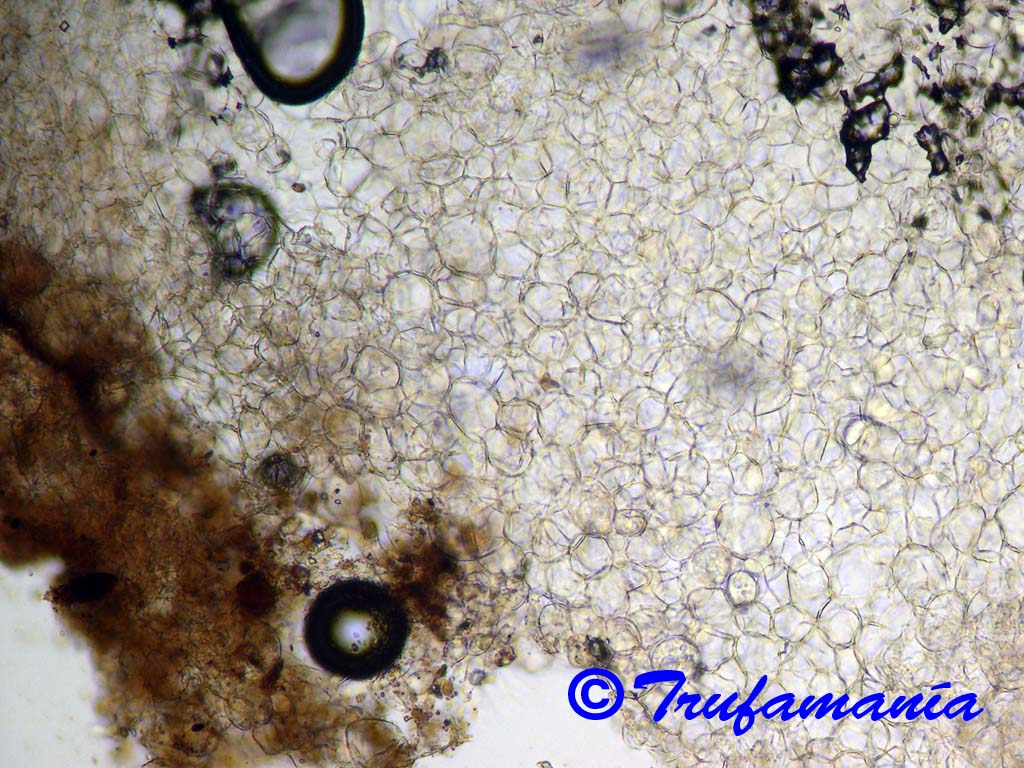
Peridium: 300–500 μm thick, whitish in cross-section, pseudoparenchymatous, composed of thin-walled, hyaline, subglobose cells, 20–50 μm diam., becoming yellowish and angular to oblong in the outermost layers.
 |
Antonio Rodríguez trufamania@gmail.com antonio@trufamania.com ORCID iD: 0000-0002-0708-7773 |